DraftKings · as of September 5, 2026
Air Force defeated Duquesne 34–0 in a dominant performance. Air Force covered by 4.5; Game went Under by 23.5. The market closed at Air Force -29.5 and the Blue Chip model made it Air Force -27.2, an edge of 2.3 points toward Duquesne.
Duquesne enters Week 1 with a completely unproven offensive line, having lost three starters from last season's unit that already struggled against FCS competition. Air Force's defensive front, while not elite, is bigger and more physical than anything Duquesne faced in the NEC last year. The Dukes' run game, which averaged only 3.8 yards per carry in 2025, will need to establish something early to keep the Falcons' pass rush honest. Without a single snap of live action together, the line's communication and blitz pickup are major unknowns, and Air Force's aggressive 3-4 scheme will test them immediately.
Last season Duquesne ranked near the bottom of the NEC in passing yards allowed per game, giving up 245 yards through the air. Their secondary lost its top two cornerbacks to graduation, and the replacements have combined for only a handful of career starts. Air Force's offense, while run-heavy, uses play-action to hit deep shots off their triple-option looks, and their quarterback has a strong arm. If Duquesne's safeties bite on the run fake, the Falcons will find one-on-one matchups on the outside that the young corners are unlikely to win.
Duquesne is making a 1,300-mile trip to Colorado Springs, playing at altitude for the first time in program history. The Dukes' roster is built on two-way players and limited substitutions, and the thin air will accelerate fatigue, especially in the second half. Air Force, accustomed to the altitude and with a deeper rotation, will benefit from Duquesne's legs wearing down. This is a situational edge that the market has likely already priced in, but it compounds every other disadvantage Duquesne faces.
The prediction market gives Duquesne a minimal chance to win, and the spread is among the largest of any FCS-vs-FBS matchup this week. This is not an overreaction to travel or altitude; it reflects a genuine talent chasm. Air Force returns eight starters on offense and seven on defense from a team that went 7-5, while Duquesne lost its starting quarterback, top two receivers, and three defensive linemen. The Dukes' power rating is far below Air Force's, and nothing in their preseason camp suggests a narrowing of that gap. The market's skepticism is well-founded, and there is no reason to expect Duquesne to keep this close.
Despite the massive spread, Duquesne's only realistic hope is to shorten the game by controlling the clock with a ball-control offense and forcing Air Force into a methodical, run-heavy attack that limits possessions. Air Force's triple-option is perfectly suited to chew clock, which paradoxically helps Duquesne by reducing the number of scoring opportunities for the Falcons. If Duquesne can avoid turnovers and keep the game in the 20s, they could stay within the number, even if they never threaten to win. This is a narrow path, but it is the one the Dukes' coaching staff will be aiming for.
Liam Szarka and Owen Allen return as a proven rushing duo, and the Falcons' offensive line, though reloading, has two full-time starters plus senior Luke Vonderhaar. Duquesne, a lower-tier FCS program, lacks the depth and size to defend the option for four quarters. Air Force's possession-based style will control the clock and wear down the Dukes, especially in the second half.
The Falcons lost their entire defensive line to graduation and do not use the transfer portal, leaving inexperience up front. However, Duquesne's offense is unlikely to exploit that weakness, as the Dukes lack the power running game or explosive passing attack to challenge Air Force's veteran back eight, which includes All-MWC linebacker Blake Fletcher and ball-hawking safety Max Mustell.
Air Force opens at home with no travel, a full week of rest, and a comfortable venue advantage. Duquesne, by contrast, is making a long road trip to altitude, which historically affects opponents' conditioning. The Falcons' disciplined, mistake-averse style, as noted by opposing coaches, should compound the Dukes' fatigue late in the game.
The market has Air Force as a massive favorite, reflecting the talent gap and home-field edge. However, season openers often feature sloppy play, and Air Force's new defensive line and unproven receivers could lead to early miscues. The Falcons may win comfortably but fail to cover a spread that requires a near-perfect performance, especially if the game stays close into the third quarter.
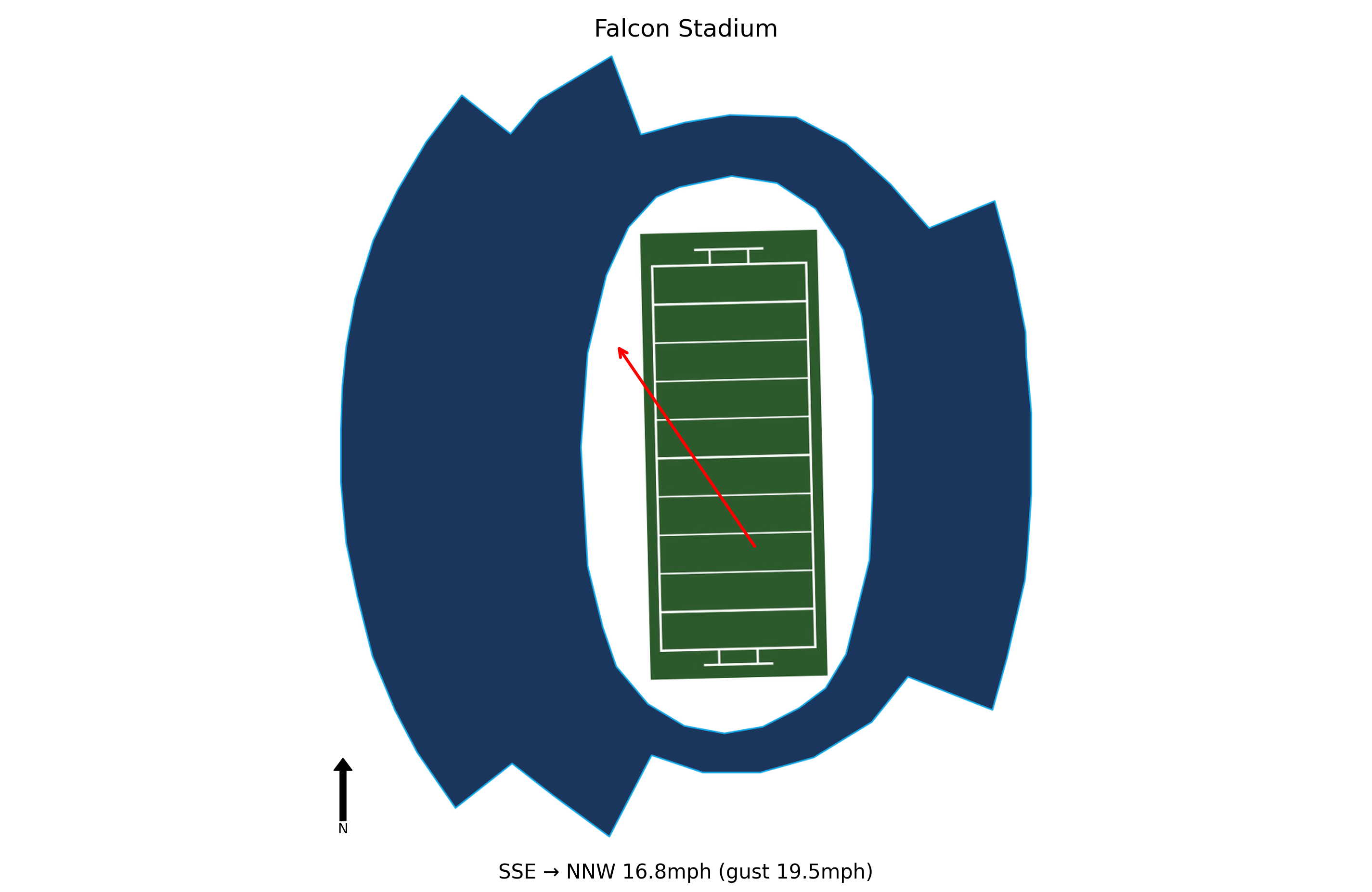
At kickoff, conditions at Falcon Stadium were Overcast, 79°F with winds of 5 mph. Weather is not expected to be a meaningful factor in this game. Historical weather data for this game is preserved in the panel alongside. Weather data is sourced from WeatherAPI.com.

Overcast
79°F
| Measure | DuquesneAway | Air ForceHome |
|---|---|---|
| This week | 1,324 miles | 0 miles |
| Last week | Bye week | Bye week |
| Season total | 1,324 miles | 0 miles |
| Body clock | 13:00 | 11:00 |
| Rest | Season opener | Season opener |


.png)


