DraftKings · as of September 5, 2026
BYU defeated Utah Tech 63–7 in a dominant performance. BYU covered by 4.5; Game went Over by 8.5. The market closed at BYU -51.5 and the Blue Chip model made it BYU -18.1 - a gap of 33.5 points toward Utah Tech, of which 32.1 points were beyond the model's measured factors. That was an information gap - the market pricing something the model does not carry - rather than a measured edge.
Utah Tech enters the season with a power rating far below BYU's, and the betting line reflects a lopsided matchup. The Trailblazers have no returning production data in the dossier, indicating a largely new roster. This is a classic FCS-vs-FBS opener where Utah Tech's primary goal will be to avoid injuries and build experience, not to compete for a win. The market's heavy favorite status for BYU is justified by the talent disparity.
Utah Tech travels 241 miles to Provo, a short trip but into a hostile environment with a significant home-field advantage for BYU. The altitude in Provo is a known factor for visiting teams, especially those from lower elevations like St. George. With BYU's power rating and home crowd, the Trailblazers will face a steep climb in all phases. This situational edge for BYU is baked into the market's confidence.
With no prior game data, Utah Tech's offensive identity is unknown, but the power rating gap suggests they will be overmatched. BYU's defense, even if rebuilding, should dominate the line of scrimmage. The total is set high, implying the market expects BYU to score at will, but Utah Tech's ability to sustain drives is doubtful. Expect a heavy reliance on short passes and runs to manage the clock, but points will be hard to come by.
BYU's offense, with a power rating among the best in the group, should have success both on the ground and through the air. Utah Tech's defense, lacking proven playmakers, will likely give up big plays and struggle to get off the field on third downs. The market's high total reflects an expectation of BYU scoring in the 50s, which is a realistic outcome given the mismatch. Utah Tech's best hope is to force turnovers, but that is a low-probability strategy.
BYU returns the Big 12 Offensive Player of the Year in running back LJ Martin, who rushed for 1,305 yards last season, and quarterback Bear Bachmeier, who completed 65% of his passes for 3,033 yards and 15 touchdowns as a freshman. Utah Tech, a lower-division opponent, has no comparable talent on defense, and BYU's home-field advantage in Provo will only amplify the mismatch. The Cougars should control the line of scrimmage and score at will, making this a comfortable opener.
Kelly Poppinga takes over as defensive coordinator after Jay Hill left for Michigan, but he inherits a unit that allowed just 332.4 yards and 19.1 points per game last year. Utah transfer Keanu Tanuvasa anchors the front, and Cal transfer Cade Uluave adds experience at linebacker. Utah Tech's offense is unlikely to pose a serious threat, giving BYU's new-look defense a chance to gel without pressure, which is crucial for the tougher Big 12 schedule ahead.
The betting line has BYU as a heavy favorite, and the total is set high, indicating expectations of a lopsided, high-scoring game. BYU's offense is explosive, but the defense is unproven under new leadership, which could lead to some early-season sloppiness. Still, Utah Tech's lack of comparable talent means the Cougars should cover comfortably, though the market's confidence in a near-shutout may be slightly optimistic given the defensive transition.
Playing at home in Provo with no travel, BYU avoids the fatigue and disruption that often plague early-season road games. The Cougars have won 12 games in each of the past two seasons and are expected to contend again, so a dominant home opener against an overmatched opponent is the perfect springboard. The crowd and altitude in Provo will further disadvantage Utah Tech, which is not accustomed to playing at this level.
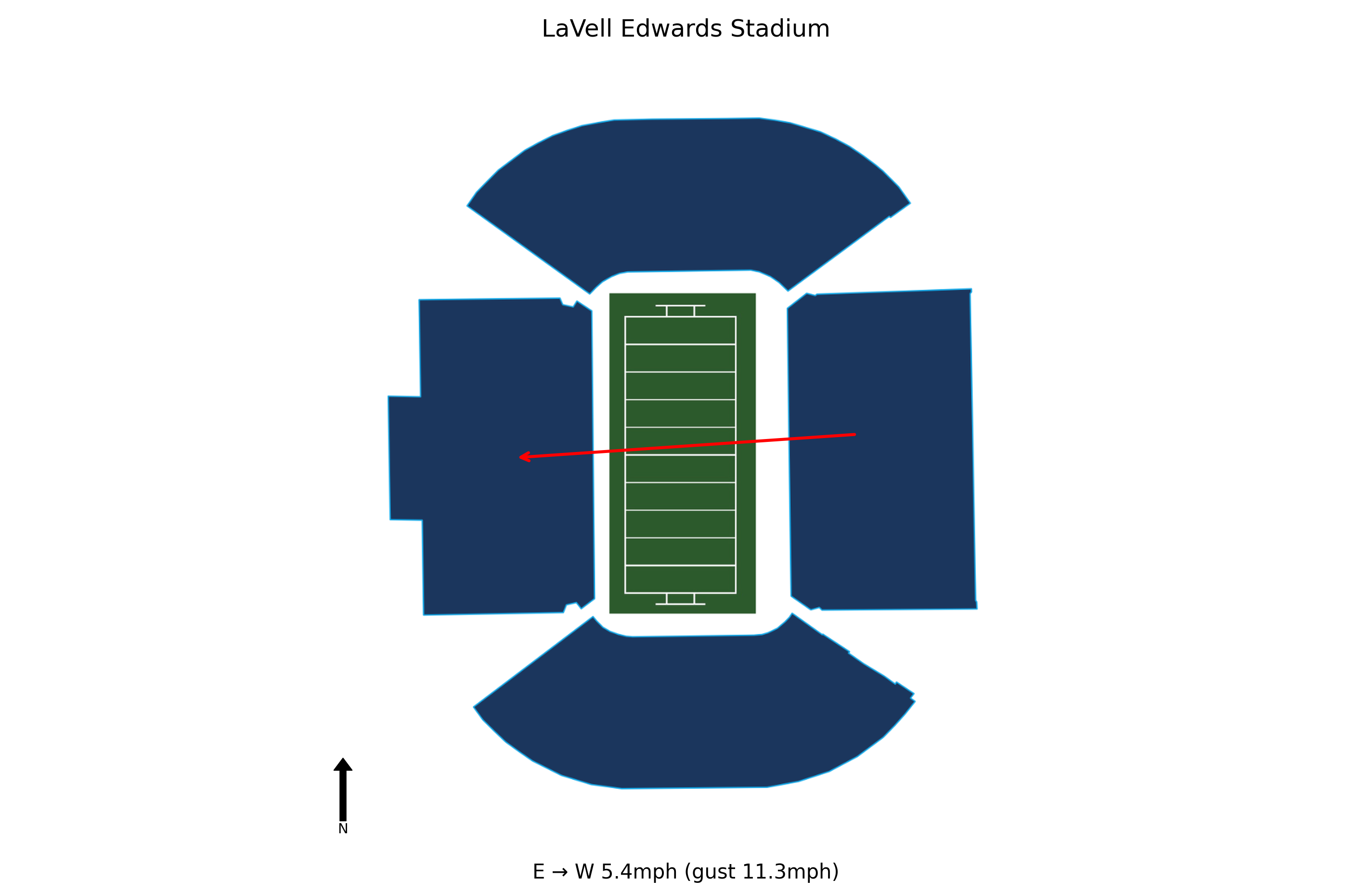
At kickoff, conditions at LaVell Edwards Stadium were Sunny, 81°F, heat index 78°F with winds of 10 mph. Weather is not expected to be a meaningful factor in this game. Historical weather data for this game is preserved in the panel alongside. Weather data is sourced from WeatherAPI.com.

Sunny
81°F
| Measure | Utah TechAway | BYUHome |
|---|---|---|
| This week | 241 miles | 0 miles |
| Last week | Bye week | Bye week |
| Season total | 241 miles | 0 miles |
| Body clock | 18:00 | 18:00 |
| Rest | 7 days | Season opener |


.png)


